
If you’re missing one or more teeth, restoring your smile is important for both function and appearance. Two common options are dental bridges and partial dentures. While both can effectively replace missing teeth, they differ in structure, comfort, and long-term benefits. Understanding these differences can help you decide which option is right for you.
What is a Dental Bridge?
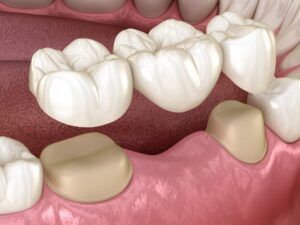
A dental bridge is a fixed restoration that fills the gap left by missing teeth. It typically consists of one or more artificial teeth anchored in place by crowns on the neighboring natural teeth.
Because it is permanently cemented, a bridge feels very similar to your natural teeth. It provides stability and allows you to chew and speak with confidence. Bridges are a great option if you have healthy teeth on either side of the gap to support the restoration.
What is a Partial Denture?
A partial denture is a removable appliance designed to replace multiple missing teeth. It usually consists of replacement teeth attached to a gum-colored base and may include metal or flexible clasps that attach to your natural teeth.
Partial dentures are often more affordable than bridges and can be a good option if you’re missing several teeth in different areas of your mouth.
Key Differences to Consider
1. Stability and Comfort
Dental bridges are fixed in place, so they don’t move or shift. Partial dentures, on the other hand, can sometimes feel less stable, especially when eating or speaking.
2. Maintenance
Bridges are cared for like natural teeth with regular brushing and flossing. Partial dentures must be removed daily for cleaning and soaking.
3. Cost and Accessibility
Partial dentures are generally more budget-friendly and may not require as much preparation. Bridges can be more expensive but offer a more permanent solution.
4. Impact on Oral Health
Bridges rely on adjacent teeth for support, which may require reshaping those teeth. Partial dentures do not alter surrounding teeth but may contribute to plaque buildup if not cleaned properly, increasing the risk of gum disease.
Which Option is Right for You?
The best choice depends on your specific needs, including the number of missing teeth, the condition of your remaining teeth, and your budget.
If you’re looking for a stable, long-term solution and have strong neighboring teeth, a dental bridge may be ideal. If you prefer a more affordable, non-invasive option or need to replace multiple teeth, a partial denture could be the better fit.
Both dental bridges and partial dentures can restore your smile and improve your quality of life. By understanding the differences, you can make an informed decision that supports your comfort, function, and long-term oral health.
About the Practice
Do you need to replace several missing teeth in a row? At Kramer Dental, Drs. Paul and James K. Kramer have a solution with dental bridges. A bridge replaces missing teeth with artificial teeth, looks great, and literally bridges the gap where one or more teeth may have been. Your bridge can be made from gold, alloys, porcelain, or a combination of these materials, and is bonded onto surrounding teeth for support. If you’re ready to restore your smile, book online or call our Selbyville office at (302) 436-5133.