
Tooth-Colored Fillings Selbyville
Natural-Looking Cavity Fillings
If you are struggling with sensitivity, discomfort, or any other unusual dental symptoms, don’t wait – call us right away! The sooner you do, the sooner we can restore your healthy, pain-free smile. Oftentimes, this can be accomplished with a filling. While they were once primarily crafted from silver amalgam, it’s more common to use tooth-colored materials today so that no unwanted attention is drawn to your smile. If you are interested in learning more about this restorative treatment, keep reading or give us a call to schedule a consultation.

Why Choose Kramer Dental for Tooth-Colored Fillings?
- Top-Rated Dental Office in the Area
- Friendly and Non-Judgmental Team
- Dental Insurance Welcome
What are Tooth-Colored Fillings?
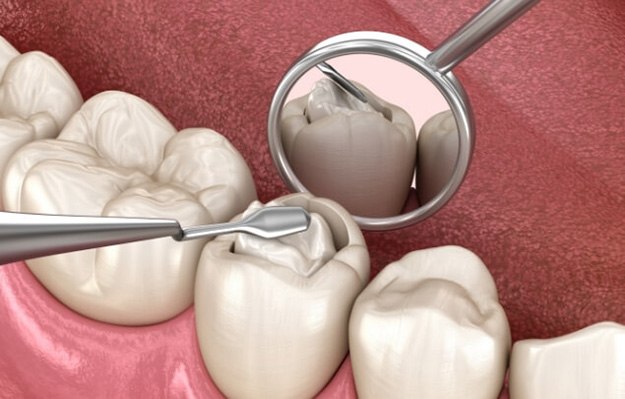
As we mentioned above, silver amalgam was once used for traditional dental restoratives, or fillings. Newer dental fillings include ceramic and plastic compounds that mimic the appearance of natural teeth. These compounds, often called composite resins, are usually used on the front teeth where a natural appearance is important. However, tooth-colored fillings in Selbyville can also be used on the back teeth, depending on the location and extent of the tooth decay.
The Process of Getting a Tooth-Colored Filling

Before your treatment begins, your doctor will discuss with you all of your options and help you choose the best filling for your particular case. In preparation for this discussion, it may be helpful to understand the two basic types of dental fillings — direct and indirect.
- Direct fillings are fillings placed into a prepared cavity in a single visit. They include silver amalgam, glass ionomers, resin ionomers, and composite (resin) fillings. The dentist prepares the tooth, places the filling, and adjusts it in one appointment.
- Indirect fillings generally require two or more visits. They include inlays, onlays, and veneers fabricated with gold, base metal alloys, ceramics, or composites. They are used when a tooth has too much damage to support a filling, but not enough to necessitate a crown. During the first visit, the dentist prepares the tooth and makes an impression of the area to be restored. The dentist then places a temporary covering over the prepared tooth. The impression is sent to a dental laboratory, which creates the restoration. At the next appointment, the dentist cements the restoration into the prepared cavity and adjusts it as needed.
The Benefits of Tooth-Colored Fillings

Tooth-colored fillings continue to be popular because:
- They don’t contain metal, so they don’t cause sensitivity to hot and cold.
- They come in a wide range of lifelike shades, making them look and feel natural.
- They are crafted from durable materials that can stand up to daily chewing.
- They can last for 10+ years with proper care and maintenance.
- The cost is usually partially covered by dental insurance providers, making them more affordable.